
You sit next to your kid in that chair and they look at you like you’d never let anything hurt them.
Meanwhile, you know this might sting a little. That gap between what they believe and what you know is one of the harder parts of being a parent.
Then something surprising happens. They squeeze your hand, take a breath, and get through it. Kids are tougher than we give them credit for.
If you’re booking your first kids’ dental appointment and have no idea what to expect, you’re not alone. Ask ten parents when to start and you’ll get ten different answers. Here’s what actually matters.
When should you take your kid to the dentist for the first time?
The American Academy of Pediatric Dentistry says by age 1, or within 6 months of the first tooth coming in. Whichever happens first.
But in practice, plenty of parents don’t hear this from their pediatrician or their own dentist. Some wait until age 2 or 3. Some wait until school requires a dental form and suddenly it’s urgent.
There’s no single right answer here. But earlier visits tend to be less about treatment and more about exposure. Your kid gets used to the chair, the sounds, and the person poking around in their mouth, before there’s ever a reason to worry about cavities.
What actually happens at a first visit
For babies and young toddlers, most dentists don’t put them in a full-size chair. Instead:
- You sit knee to knee with the dentist
- Your child lies back with their head resting on the dentist’s lap
- The dentist does a quick visual check, sometimes just with a gloved finger
- The whole thing takes less than a minute
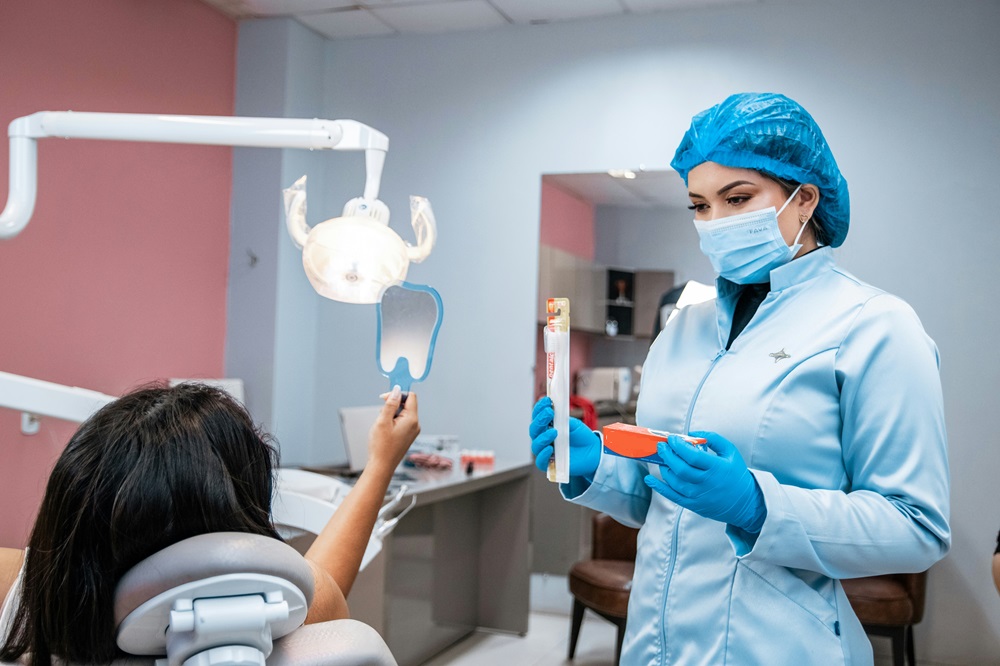
For toddlers who are a bit older, you might get a proper chair, a quick look, a cleaning attempt, and a new toothbrush to take home. Don’t expect a full workup on visit one. The goal is comfort, not a deep clean.
Why prep matters more than age
A few things come up again and again from parents who’ve had smooth first visits:
- Read books about it beforehand. Stories about doctor visits, first flights, or new experiences give your kid a framework. They know what’s coming instead of walking in blind.
- Bring them along to your own appointment first. Let them watch you sit in the chair and walk out fine. It takes the mystery out of it.
- Rename the tools. The suction tube becomes “Mr. Thirsty.” The polisher becomes the “tooth tickler.” One parent said his son still calls it Mr. Thirsty at age 11.
- Warn them if something will pinch. Kids do better with a heads up than a surprise. Telling them “this will feel like a quick pinch, then it’s done” beats pretending nothing will happen.
- Pick a dentist who works with kids often. A pediatric dentist’s office usually has smaller tools, shorter appointments, and staff who know how to talk to a 2 year old without sounding fake.
- Stay calm yourself. Kids pick up on your energy. If you’re tense and hovering, they’ll match that. If you’re relaxed, they often are too.
The stay calm part is harder than it sounds
You’re sitting there watching a stranger get close to your kid’s face, and every instinct says to jump in and comfort them.
But dentists who work with kids all day will tell you the opposite helps more. Kids whose parents stay steady tend to handle the visit better than kids whose parents hover, coo, or apologize the whole time.
That doesn’t mean ignore them. It means don’t project your own nerves onto a situation that, for most first visits, isn’t actually painful.
What if your kid still isn’t ready
Some kids fight the toothbrush every single day and there’s no way they’re sitting still for a stranger. If that’s you, it’s fine to wait a bit. A few things that help buy time:
- Keep brushing at home, even if it’s a battle
- Try a soft toothbrush and let them hold it themselves first
- Watch a kid-friendly video about dentist visits together
- Ask your pediatrician if there’s a medical reason to go sooner (pain, visible decay, a knocked tooth)
If there’s no urgent issue, a few extra months of practice at home often makes the actual visit easier.
Finding a dentist your kid won’t dread
Not every dental office is built for toddlers. Some have TVs on the ceiling, toy machines by the door, and staff who sing while they clean teeth. Others are just a regular office that happens to see kids too.
If you’re searching for a kids dental appointment near you, it’s worth checking if the practice specializes in pediatric care before you book. The environment makes a bigger difference than most parents expect going in.
The takeaway
There’s no perfect age, and there’s no guaranteed smooth visit. Some kids sail through at 12 months. Others need three tries before they’ll even sit down.
What helps across the board: a little prep, an honest heads up about what will happen, and a parent who stays steady even when their own stomach is in knots.
FAQ
How often should kids go to the dentist after their first visit?
Most dentists recommend every 6 months, same as adults. Some may space it out to once a year if your child has healthy teeth and no cavities.
Do baby teeth really need to be checked if they’ll fall out anyway?
Yes. Baby teeth hold space for adult teeth and help with chewing and speech. Untreated decay in baby teeth can also affect the permanent teeth growing underneath.
What should I feed my kid before a dental appointment?
A light meal works better than a big breakfast right before. Some kids feel queasy in the chair on a full stomach, especially if there’s any gagging involved during the exam.
Will my child need X-rays at their first visit?
Usually not. X-rays typically start once your child has enough teeth close together, often around age 5 or 6, unless the dentist suspects a specific problem earlier.
What if my child needs a filling or extraction at a young age?
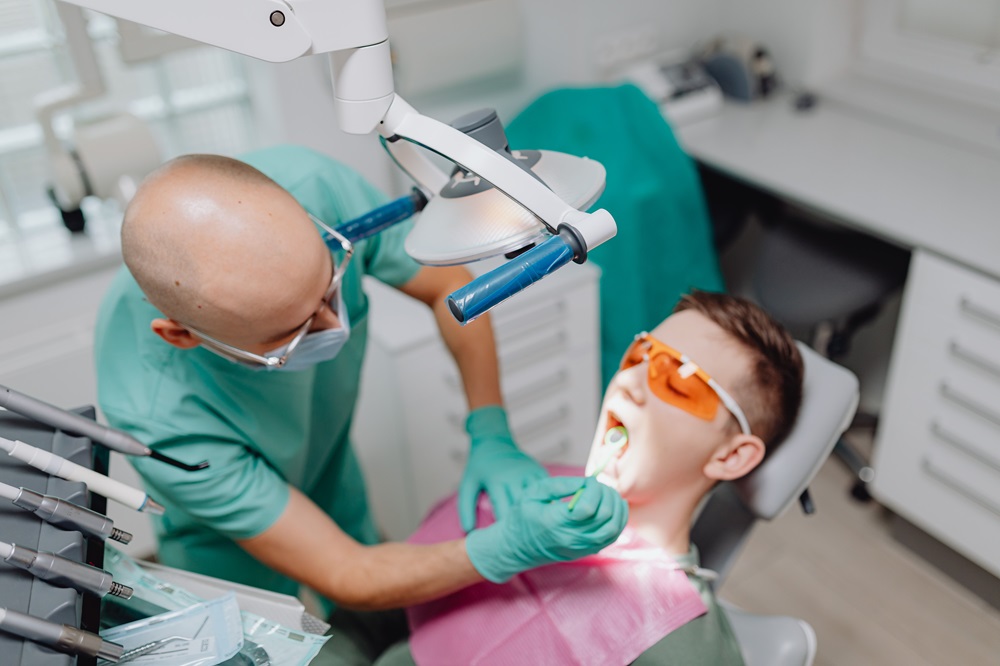
Pediatric dentists handle this often. For very young or anxious kids, some use laughing gas or, in more involved cases, general anesthesia. Ask your dentist what they recommend based on the procedure.
Is it normal for toddlers to cry at the dentist even if nothing hurts?
Yes. Crying at that age is often more about being in an unfamiliar situation with a stranger than actual pain. It tends to improve with repeat visits.