
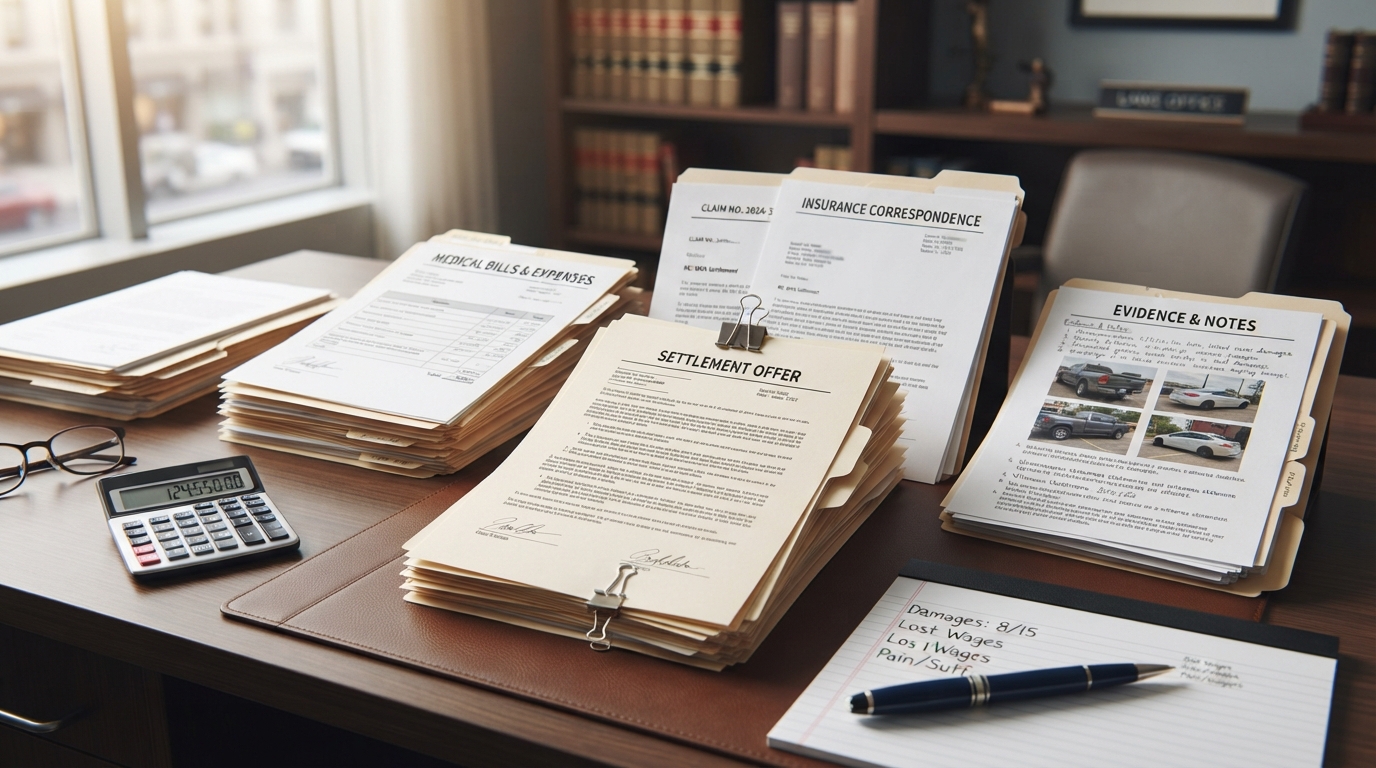

A low settlement offer in a New York personal injury claim does not always mean the claim is weak. It may mean the insurance company needs more documentation, disputes fault, questions medical treatment, raises coverage limits, or is testing whether the injured person will accept less than the claim may support. People reviewing an early offer may use a personal injury lawyer Long Island resource to understand how evidence, damages, insurance, and deadlines are generally evaluated.
Quick Answer
After a low settlement offer, the first step is usually to compare the offer against the full claim file. That means reviewing medical records, bills, lost income, future care, pain and suffering, liability evidence, comparative fault arguments, policy limits, liens, and whether treatment is complete. A low offer may be answered with additional evidence, a written counter-demand, negotiation, mediation, or litigation if settlement discussions do not resolve the claim.
Key Takeaways
- A low offer should be compared against the full evidence file, not only the current medical bills.
- Early offers may not account for future treatment, lost earning capacity, long-term pain, or permanent limitations.
- New York comparative negligence rules may reduce damages based on the injured person’s share of fault.
- New York Insurance Law § 2601 identifies unfair claim settlement practices, including not attempting prompt, fair, and equitable settlements when liability has become reasonably clear, when such conduct occurs without just cause and with enough frequency to indicate a general business practice.
- New York DFS states that Regulation 64 is designed to assure prompt and fair settlement in certain auto physical damage and property damage liability claims.
- Many negligence-based New York personal injury claims have a three-year limitations period, while wrongful death, public entity, and other claim types may involve different rules.
- Public corporation claims may require notice of claim within 90 days when notice is required.
What Counts as a Low Settlement Offer?
A settlement offer may feel low when it does not reflect medical treatment, lost income, pain, daily limitations, future care, scarring, disability, or the strength of the liability evidence. It may also be low when it ignores facts that are already documented in the claim file.
A low offer may fail to account for:
- Emergency medical care
- Hospital bills
- Surgery
- Physical therapy
- Specialist treatment
- Future treatment needs
- Lost wages
- Reduced earning capacity
- Pain and suffering
- Scarring or disfigurement
- Permanent limitations
- Out-of-pocket expenses
- Comparative fault evidence
- Insurance policy limits
- Serious injury evidence in motor vehicle claims
A low offer should not be evaluated by emotion alone. It should be compared against the records, bills, medical opinions, liability evidence, and damages proof.
Why Insurance Companies Make Low Offers
Insurance companies may make low offers for several reasons. Sometimes the insurer believes the evidence is weak. Sometimes key records are missing. Sometimes the adjuster is disputing injury causation, treatment length, liability, comparative fault, or future damages.
Common reasons for a low offer include:
- Medical records are incomplete.
- Treatment is still ongoing.
- There are gaps in medical care.
- The insurer disputes that the accident caused the injury.
- Fault is disputed.
- The injured person may share some responsibility.
- Lost wages are not documented.
- Future care is not supported by medical opinions.
- The policy limit is low.
- There are prior injury records.
- The claim was submitted before damages were fully developed.
- The insurer is making an early negotiation position.
A low first offer is often not the final word. It may be the beginning of a negotiation.
Do Not Compare the Offer Only to Medical Bills
Medical bills are important, but they are not the entire claim. A personal injury claim may include economic and non-economic damages, depending on the facts.
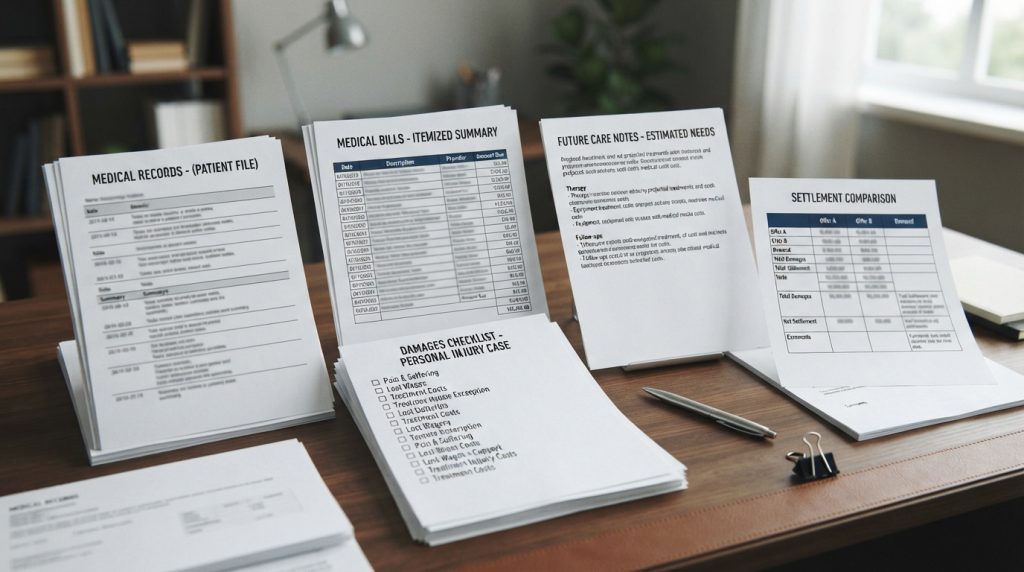
A claim may include:
- Medical expenses
- Future medical care
- Lost income
- Reduced earning capacity
- Pain and suffering
- Physical limitations
- Loss of normal activity
- Scarring
- Disability
- Emotional distress
- Out-of-pocket expenses
A person with $20,000 in medical bills may have very different damages from another person with the same bills if one person recovered quickly and the other needs surgery, misses work, or has permanent limitations.
A broader guide to evidence for personal injury claims can help explain why medical records, accident evidence, income proof, and daily-life documentation often need to work together.
Review Whether Treatment Is Complete
A settlement offer may be too early if medical treatment is still ongoing. If the injured person has not reached a clear medical point, the full cost of recovery may not be known.
Treatment questions may include:
- Is physical therapy still ongoing?
- Has imaging been completed?
- Has a specialist reviewed the injury?
- Is surgery being discussed?
- Are injections or pain management expected?
- Are work restrictions still active?
- Is future care recommended?
- Are symptoms improving, worsening, or unchanged?
- Is there a permanent limitation?
Settling before the medical picture is clear may create risk because a settlement release can usually end the claim being resolved. Future bills may not be included if they are not considered before settlement.
Review the Liability Evidence
A low offer may reflect a liability dispute. The insurance company may argue that the injured person caused the accident, contributed to it, failed to avoid a hazard, or gave inconsistent statements.
Liability evidence may include:
- Police reports
- Incident reports
- Photos
- Videos
- Witness statements
- Dashcam footage
- Surveillance footage
- Property maintenance records
- Vehicle damage photos
- Commercial driver records
- Construction site records
- Nursing home records
- Dog owner history
- Boating accident reports
- Expert review
Under New York CPLR § 1411, culpable conduct by the claimant generally does not bar recovery, but damages may be reduced in proportion to the claimant’s share of fault. That makes liability evidence important when an insurer is using shared fault to justify a lower offer.
Review the Damages Evidence
A settlement offer may be low because damages are not fully documented. Insurance companies usually want records that connect the accident to the injury and the injury to the losses.
Damages evidence may include:
- Emergency medical records
- Hospital records
- Imaging reports
- Specialist notes
- Surgery records
- Physical therapy records
- Pain management records
- Prescription receipts
- Medical bills
- Work restriction notes
- Pay stubs
- Tax records
- Employer letters
- Out-of-pocket receipts
- Photos of visible injuries
- Daily limitation notes
- Future care recommendations
Publicly available personal injury case results may provide general context, although every claim depends on its own facts, injuries, evidence, insurance coverage, and applicable law.
Review Lost Income and Reduced Earning Capacity
Lost income is often underdeveloped in early settlement discussions. A person may miss work, lose overtime, use sick time, reduce hours, change job duties, or become unable to return to the same occupation.
Useful wage-loss evidence may include:
- Employer letters
- Pay stubs
- W-2 forms
- Tax returns
- Timesheets
- Disability forms
- Union records
- Self-employment records
- Business income records
- Doctor work restriction notes
- Job descriptions
- Return-to-work notes
A lost income claim is stronger when medical restrictions connect directly to the financial loss. For example, a lifting restriction may matter more when the injured person works in construction, warehousing, caregiving, delivery, or another physical job.
Review Future Medical Care
Future medical care can significantly affect settlement value. If an early offer does not account for future treatment, the offer may not reflect the full claim.
Future care may include:
- Surgery
- Specialist follow-up
- Physical therapy
- Occupational therapy
- Pain management
- Medication
- Injections
- Medical equipment
- Home modifications
- Future imaging
- Long-term rehabilitation
Future medical care should usually be supported by medical records, doctor recommendations, specialist opinions, or expert review. A future-care claim based only on guesswork may be easier for an insurer to dispute.
Understand the Difference Between No-Fault and Settlement
In New York motor vehicle claims, no-fault benefits and a bodily injury settlement are not always the same thing. No-fault may address certain medical bills and lost earnings regardless of fault, while a liability claim against an at-fault party may involve damages beyond no-fault depending on the facts.
The New York Department of Financial Services states that written notice of a no-fault claim must generally be submitted as soon as reasonably practicable, but no more than 30 days after the accident unless there is clear and reasonable justification for late filing.
A car accident attorney resource may help readers understand why no-fault paperwork, serious injury evidence, medical bills, liability proof, and settlement negotiations can move on separate tracks after a crash.
Review Whether the Offer Covers Property Damage Only
Some early insurance offers involve property damage only. This can happen after motor vehicle accidents, boating accidents, premises incidents involving damaged personal property, or other claims where repair costs are addressed before bodily injury damages.
Before evaluating an offer, clarify whether it covers:
- Vehicle repair
- Total loss value
- Rental reimbursement
- Personal property damage
- Medical expenses
- Lost income
- Pain and suffering
- Bodily injury release
- All claims from the accident
New York DFS states that Regulation 64 provides guidelines and time limits for certain auto collision, comprehensive, and property damage liability claims, including payment within five business days after settlement is agreed and written explanation when a claim is not settled within 30 days after notice.
Read the Release Carefully
A settlement offer may require a release. A release can affect whether future claims may be brought for the same accident or injury. This is why the scope of the release matters.
Before signing, review whether the release covers:
- Bodily injury claims
- Property damage claims
- Medical bills
- Lost income
- Future treatment
- Unknown injuries
- All defendants
- Only one insurer
- All claims from the accident
- Confidentiality terms
- Indemnity or lien language
A low settlement offer can become more harmful if the release is broader than expected. The settlement amount and the release language should be reviewed together.
Countering a Low Settlement Offer
A low offer may be answered with a structured counter-demand. A strong counter usually explains why the offer is too low and supports that position with documents.

A counter-demand may include:
- A liability summary
- Medical record summary
- Medical bill total
- Lost income calculation
- Future care discussion
- Pain and suffering explanation
- Photos and videos
- Witness statements
- Expert opinions, when needed
- Policy limit information
- Response to fault arguments
- Specific settlement demand
A counter-demand should avoid exaggeration. It should connect each claimed loss to evidence.
What a Strong Settlement Response Should Explain
A settlement response should make the claim easier to evaluate. It should not simply say that the offer is unfair. It should explain why.
A strong response may address:
- What happened
- Who was responsible
- What evidence supports liability
- What injuries were diagnosed
- What treatment was needed
- Whether future care is expected
- How work was affected
- How daily life changed
- Why comparative fault arguments are disputed
- Why the offer does not reflect the full damages
The goal is to make the gap between the offer and the documented damages clear.
Low Offers in Slip, Trip, and Premises Liability Claims
Premises liability claims often receive low offers when the insurer disputes notice, property control, defect severity, lighting, weather, footwear, or comparative fault.
A premises liability offer may be low because the insurer argues:
- The hazard was open and obvious.
- The property owner did not know about the hazard.
- The injured person was not paying attention.
- Photos do not show the condition clearly.
- The incident report is incomplete.
- Surveillance footage is missing.
- Medical treatment was delayed.
- The fall did not cause the claimed injury.
A premises liability attorney resource may help explain why maintenance records, photos, witness statements, inspection practices, and notice evidence can affect unsafe-property settlement discussions.
Low Offers in Construction and Workplace Injury Claims
Construction and workplace injury claims can involve serious injuries, multiple responsible parties, workers’ compensation issues, third-party liability, safety records, and expert review. Low offers may happen when the insurer disputes who controlled the worksite, whether a safety rule applied, whether the worker’s conduct contributed, or whether the injury caused long-term work loss.
Important evidence may include:
- Incident reports
- Site photos
- Safety meeting records
- OSHA-related documents
- Contractor and subcontractor information
- Witness statements
- Equipment records
- Medical restrictions
- Lost wage records
- Future earning capacity evidence
A construction accident attorney resource may help readers understand why safety records, job-duty evidence, medical restrictions, and income documentation may all affect settlement value.
Low Offers in Truck and Commercial Vehicle Claims
Truck and commercial vehicle claims may receive low offers when the insurer disputes liability, driver status, maintenance records, company responsibility, injury causation, or coverage.
A low offer may require review of:
- Driver logs
- Employer records
- Dispatch information
- Maintenance records
- Inspection reports
- Dashcam or telematics data
- Cargo records
- Insurance policies
- Driver qualification records
- Accident reconstruction
A truck accident attorney resource may help explain why commercial vehicle cases often require deeper investigation than ordinary car accident claims.
Policy Limits Can Affect Settlement Value
Sometimes an offer is low because available insurance coverage is limited. A claim may have strong damages but limited collectible coverage. In other cases, more coverage may exist through another policy.
Coverage questions may include:
- What policy applies?
- What are the policy limits?
- Is there umbrella coverage?
- Are multiple defendants insured?
- Is there commercial coverage?
- Is the vehicle owned by a company?
- Is a rental company involved?
- Is a public entity involved?
- Does a property owner have coverage?
- Are exclusions being raised?
Policy limits do not change the injury, but they can affect the practical settlement discussion.
Liens and Medical Bills Can Affect Net Recovery
A settlement number is not always the same as the amount the injured person receives after case expenses, liens, reimbursements, and unpaid medical bills are addressed.
Post-settlement issues may include:
- Health insurance reimbursement
- Medicare or Medicaid issues
- Workers’ compensation liens
- Medical provider balances
- No-fault payment issues
- Hospital liens
- Case expenses
- Attorney fee structure
- Court approval for child claims
- Estate paperwork in wrongful death claims
A settlement offer should be reviewed in light of both gross settlement value and possible net recovery.
When a Lawsuit May Be Needed
A lawsuit may become necessary when negotiation does not resolve the claim. Filing a lawsuit does not mean the case will definitely go to trial, but it may allow formal discovery and court-supervised progress.
A lawsuit may be considered when:
- Liability is disputed.
- The offer does not reflect documented damages.
- The insurer refuses to negotiate meaningfully.
- Important records must be obtained formally.
- Multiple parties dispute responsibility.
- Expert review is needed.
- Policy limits are unclear.
- The deadline is approaching.
- Settlement discussions have stalled.
Litigation may involve complaint filing, service of papers, discovery, depositions, expert disclosure, motions, mediation, settlement conferences, and trial preparation.
Deadlines Still Matter During Negotiation
Settlement negotiations do not automatically stop legal deadlines. The New York Courts statute of limitations timetable lists three years for car accidents, three years for slip and fall claims, three years for many other negligence-based personal injury claims, and two years for wrongful death claims.

Different or shorter deadlines may apply when a claim involves:
- Public entities
- Municipal vehicles
- Public sidewalks
- Public schools
- Public hospitals
- Public transportation
- Public docks
- Wrongful death
- Product liability
- No-fault benefits
- Insurance notice
- Medical bill submissions
Claims involving public corporations may require a notice of claim within 90 days when notice is required under New York General Municipal Law § 50-e.
Practical Low Offer Review Chart
| Review Area | What to Check | Why It Matters |
| Medical treatment | Records, bills, diagnosis, future care | Shows injury severity and recovery needs |
| Lost income | Pay stubs, employer letters, tax records | Supports wage loss and reduced earning claims |
| Liability | Reports, photos, videos, witnesses | Affects fault and negotiation strength |
| Comparative fault | Insurer’s blame arguments | May reduce damages under New York law |
| Insurance coverage | Policy limits and applicable policies | Affects practical settlement options |
| Release language | What claims are being released | Determines what rights may end after settlement |
| Deadlines | Lawsuit, notice, insurance, no-fault rules | Prevents negotiations from creating deadline risk |
Common Mistakes After a Low Settlement Offer
Some mistakes can make a low offer harder to challenge.
Common mistakes include:
- Accepting the first offer too quickly
- Signing a broad release without understanding it
- Negotiating before treatment is clear
- Not gathering complete medical records
- Ignoring future care recommendations
- Not documenting lost income
- Not responding to comparative fault arguments
- Not checking policy limits
- Not preserving video or witness evidence
- Not reviewing liens or unpaid bills
- Missing no-fault, insurance, notice, or lawsuit deadlines
- Posting misleading social media content
The strongest response to a low offer is usually organized, specific, and evidence-based.
How to Organize a Claim Before Responding
Before responding to a low offer, it may help to organize the claim file by category.
Useful categories include:
- Accident reports
- Photos and videos
- Witness information
- Medical records
- Medical bills
- Prescriptions
- Work restrictions
- Wage records
- Out-of-pocket receipts
- Insurance letters
- Prior offer letters
- Future care recommendations
- Pain and daily limitation notes
- Policy information
- Deadline notes
A clear file can make negotiation more focused and reduce confusion.
When Legal Guidance May Be Useful
Legal guidance may be useful when the offer is much lower than medical bills, treatment is ongoing, surgery may be needed, work has been affected, fault is disputed, insurance coverage is unclear, public property is involved, or the release language is broad.
A low-offer review may require accident reports, medical records, wage records, expert review, policy analysis, lien review, comparative fault analysis, release review, and deadline tracking.
People researching local support may review a Farmingdale legal office location when looking for Long Island personal injury claim information.
FAQs About Low Settlement Offers in New York
Should someone accept the first personal injury settlement offer?
Not automatically. A first offer may arrive before treatment is complete, future care is known, wage loss is documented, or liability evidence is fully reviewed. The offer should be compared against the full claim file and release language.
Why would an insurance company make a low settlement offer?
An insurer may make a low offer because records are missing, treatment is ongoing, fault is disputed, injury causation is questioned, policy limits are low, comparative fault is alleged, or the offer is an early negotiation position.
Can a low settlement offer be negotiated?
Yes. A low offer may be answered with a counter-demand supported by medical records, bills, lost income proof, witness statements, photos, future care evidence, and a response to fault or coverage arguments.
Does comparative fault affect settlement offers in New York?
Yes. New York comparative negligence rules may reduce damages in proportion to the claimant’s share of fault. Insurers may use shared-fault arguments to lower offers, so liability evidence can be important.
Is there a deadline while negotiating with insurance?
Yes. Settlement discussions do not automatically stop legal deadlines. Many New York negligence-based injury claims have a three-year limitations period, but wrongful death, public entity, no-fault, insurance notice, and other matters may involve different or shorter deadlines.
Final Thoughts
A low settlement offer in a New York personal injury claim should be reviewed carefully before any release is signed. The offer should be compared against the full evidence file, including medical records, bills, lost income, future care, pain and suffering, liability proof, comparative fault issues, policy limits, liens, and deadlines. The strongest response usually explains why the offer is low, supports each claimed loss with documentation, and keeps legal and insurance deadlines in view.